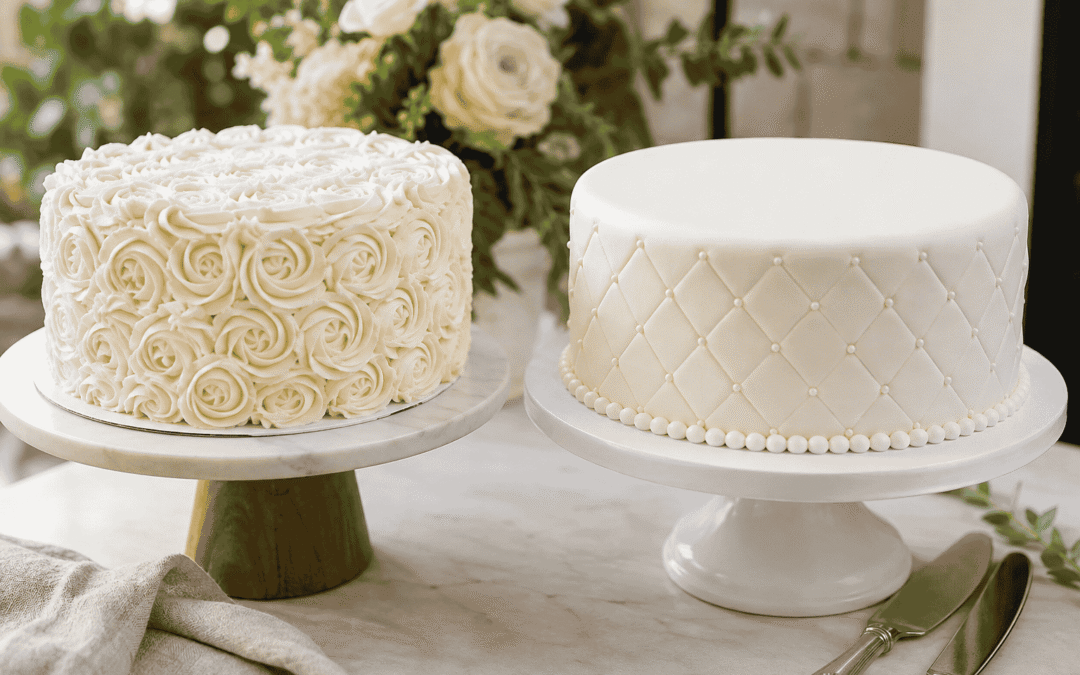
There are tons of elements that go into pplanning a wedding or a birthday celebration in a Vancouver backyard. Whether you’re tempted by the velvety smoothness of a buttercream finish or smooth finish of fondant vs. buttercream cake, the choice you make affects not only the aesthetic of your masterpiece but also the logistics of your event and your guests’ experiences, from the dewy summers on the coast to our typically torrid interior temperatures.
The Anatomy of a Fondant vs Buttercream Cake
When it comes to pure flavor, buttercream is the gold standard for most Canadians. At the peak of the summer months in Ontario or Quebec, if your reception hall isn’t air-conditioned, buttercream can become quite soft. Choosing buttercream may require sacrificing some decorative precision in exchange for its rich, traditional flavor.
The Artistry of a Fondant vs Buttercream Cake
Understanding the differences between Fondant vs Buttercream Cake helps bring your cake design to life. If you’re envisioning a design beyond a simple frosted cake (perhaps a geometric pattern, hand-painted accents, or a multi-tiered structural design), fondant is often the only medium that allows you to achieve this. A thick layer of rich gauche, or even buttercream underneath, provides a smooth, stable base beneath the fondant for the sophisticated fondant exterior, so the guest experience remains largely the same.
Canadian Climate Challenges for Fondant vs Buttercream Cake
Along Canada’s Atlantic coast, high humidity during outdoor weddings can soften buttercream and make it less stable. The best choice depends less on the finish itself and more on proper transportation and storage.
Fondant vs Buttercream Cake: Key Insights
Adequate AC climate control in the venue or your transport to the reception is important. There are ways to create a fondant-like’ finish nowadays with modern buttercream techniques.
Fondant vs Buttercream Cake: Frequently Asked Questions
Can I have a cake that looks like fondant but tastes like buttercream?
Yes, this is actually a very popular trend in contemporary cake design. Expert bakers use firm buttercream to replicate fondant’s sharp edges or apply fondant over a premium buttercream or gauche base to achieve the desired look. This way, you get the dramatic aesthetic of fondant without the slightly altered taste.
How does the Canadian climate affect my choice?
Our climate is certainly something to consider. Fondant provides better protection against humidity, although it can still develop condensation (“sweat”) when moved between cold and warm environments. Ensure your cake will be stored in a temperature-controlled environment regardless of your chosen finish.
Can I use fondant on any type of cake flavor?
Fondant can be used with many cake flavors; however, it is recommended for dense, moist cake varieties such as mud cake, pound cake, or other dense sponge cakes, which can bear its weight more effectively. Lighter cake varieties like angel food or foam cake may not adequately support this sugary exterior layer. Be sure to mention your intention to use fondant when selecting your flavors to ensure your baker can recommend an appropriate pairing.
Conclusion
If all of you share your childhood memories of pure butter that has the unique ability actually to melt on the tip of your tongue, you know that only one kind of cake topping will suffice, and that’s buttercream cake frosting. Regardless of your desired finish, the key component of any cake is the love it’s made with and shared with. If you pay attention to the details and flavor, you will end up with the best cake possible. For corporate occasions and parties, professional content writers can be used to write about different parts of your event planning.